No products in the cart.
No products in the cart.




Turmeric (Curcuma longa) is a celebrated spice, but not all turmeric is created equal. While the common kitchen variety offers color and flavor, the specialized Lakadong Turmeric stands out as a “super-spice” due to its exceptional potency and unique origin.
Understanding the difference between Regular Turmeric and the acclaimed Lakadong Turmeric is key to maximizing the health benefits of this ancient healer.
The primary difference between the two varieties lies in their concentration of Curcumin, the active polyphenol responsible for turmeric’s powerful anti-inflammatory and antioxidant properties.
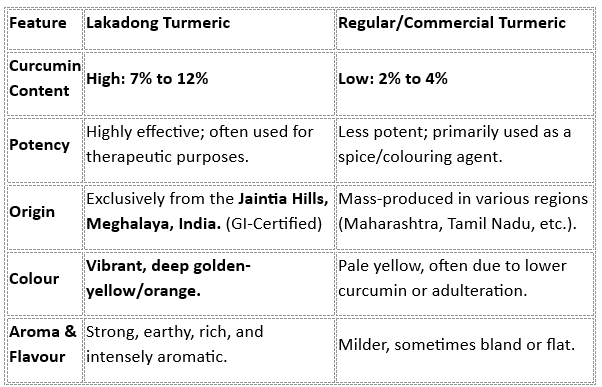
Because Lakadong turmeric contains two to six times the Curcumin found in regular turmeric, a small amount goes much further both in flavor and medicinal impact. This high concentration is particularly important for those seeking natural support for:
Inflammation and Joint Health: Higher Curcumin delivers a stronger natural anti-inflammatory response, often compared to certain NSAIDs in efficacy studies.
Immunity & Brain Health: The boosted antioxidant capacity helps fortify the body’s defenses and supports cognitive function by increasing BDNF (Brain-Derived Neurotrophic Factor).
Lakadong’s superior quality is not a coincidence; it is a direct result of its unique geographical origin and traditional cultivation methods.
Lakadong Turmeric has been granted the prestigious Geographical Indication (GI) tag by the Government of India. This certification legally guarantees that any product labeled “Lakadong” must originate from the specified region in the Jaintia Hills of Meghalaya.
The unique high-altitude, mineral-rich, acidic soil, coupled with heavy rainfall and a pristine, non-polluted environment in the Jaintia Hills, creates the perfect “terroir” that triggers the turmeric plant to produce exceptionally high levels of Curcumin. Attempts to grow the Lakadong variety elsewhere typically result in a significant drop in its Curcumin content.
While regular turmeric remains perfectly fine for everyday cooking where color and general spice are desired, Lakadong Turmeric is the better choice for therapeutic and wellness applications where potency is paramount.
For maximum absorption of the precious Curcumin, always combine turmeric with black pepper (Piperine) and a source of healthy fat (like ghee or coconut oil) to increase bioavailability by up to 2000%.
This article is provided for general informational and educational purposes only and is based on published scientific research and traditional knowledge. It is not intended to diagnose, treat, cure, or prevent any disease. The claims regarding higher Curcumin content are generally based on industry testing standards. Before initiating any major dietary changes or supplementation, especially if you are pregnant, nursing, or currently taking prescription medications, always consult with a qualified healthcare professional.
Hewlings, S. J., & Kalman, D. S. (2017). Curcumin: A Review of Its Effects on Human Health. Foods, 6(10), 92. (Review on anti-inflammatory and antioxidant mechanisms).
Panahi, Y., et al. (2014). Curcumin and Piperine Combination on Pain and Stiffness in Patients with Knee Osteoarthritis. The Journal of Alternative and Complementary Medicine, 20(11). (Data on pain relief and the synergistic effect of piperine).
Lopresti, A. L., et al. (2018). Efficacy of a Solid Lipid Curcumin Formulation in General Stress and Mood Symptoms. Journal of Affective Disorders, 239. (Research supporting BDNF increase and cognitive benefits).
Government of India (Geographical Indication Registry). Confirmation of GI Tag Status for Lakadong Turmeric. (Source confirming origin protection).
Various industry and academic testing reports confirming Lakadong Turmeric’s typical Curcumin content range (7-12%) versus conventional varieties (2-4%).